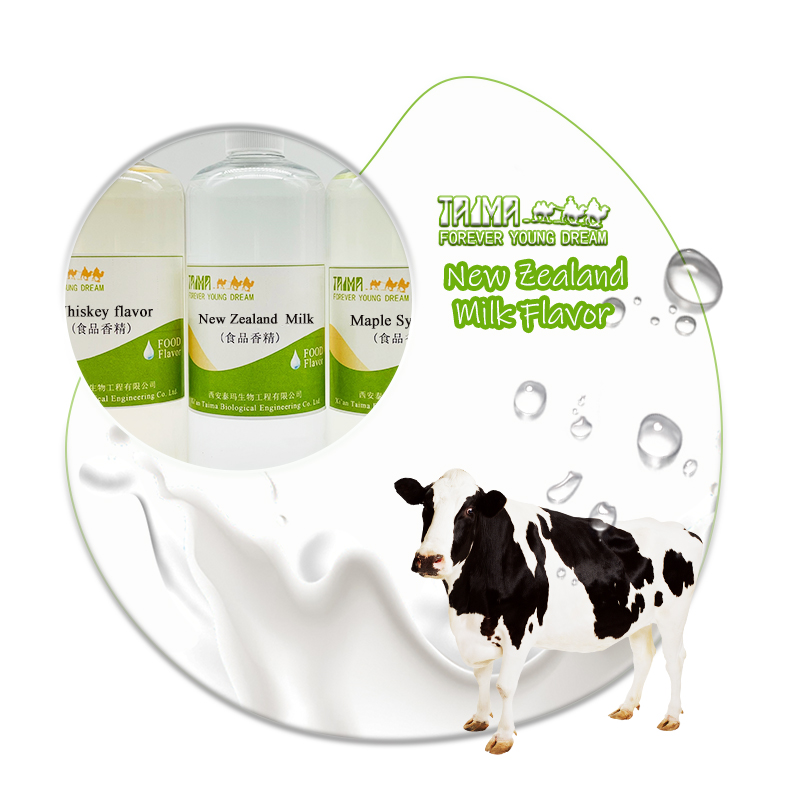
In the food industry, “New Zealand milk flavoring” is considered synonymous with high-quality dairy flavor. It doesn’t merely mimic ordinary milk flavor; rather, through molecular blending technology, it recreates the unique natural aroma, high fat content, and subtle grassy fragrance of milk from grass-fed New Zealand cows.
New Zealand milk flavoring doesn’t refer to a single flavoring “from New Zealand,” but rather a series of milk flavorings developed by domestic flavoring manufacturers based on the concept of “New Zealand pasture milk aroma.” It’s typically marketed as “refreshing, natural, and low in fishy smells,” with the core aroma being “fresh milk – milk fat – slightly sweet.”
Aroma Description: A perfect balance of freshness and richness.
Top Notes: Bright, clean, fresh raw milk aroma with the fresh scent of natural pastures (distinct from the caramelized sweetness of ordinary milk powder).
Middle Notes: Rich, full-bodied creamy aroma, mimicking the silky texture of high milk fat content.
Base Notes: A warm, lingering, and natural creamy aftertaste, without any chemical residue.
Core Function: Imparts sensory quality at the “origin” level to products, enhances their mouthfeel, and significantly improves the authentic animal milk feel of plant-based products (such as oat milk).
Food New Zealand Milk Flavour is used in Lactic acid bacteria beverages, fruit-flavored, yogurt, ice cream, milk foam, cheese, bread, cake, cookies, candies, tablet candies, soy milk, coconut milk, protein powder, e-cigarette oil, fishing bait, etc
Main Uses:
Dairy Beverages: Flavored milk, lactic acid bacteria drinks, fruit-flavored milk—masks the “salty/beany” taste of skim milk powder or plant protein, enhancing the “fresh pasture” impression.
Frozen Drinks/Dairy Products: Yogurt, ice cream, milk foam, processed cheese—has affinity with milk fat, inhibits ice crystal formation, and results in a smooth texture.
Baking and Pastries: Bread, cakes, cookies, mooncakes—premixed with butter before addition, resulting in less than 15% aroma loss during high-temperature baking.
Candy & Chocolate: Hard candy, milk candy, toffee, compressed candy—added later in the sugar boiling process to mask the metallic taste of sweeteners.
Plant-based: Oat milk, soy milk, coconut milk – mimicking a “refreshing creamy” flavor, reducing the amount of milk powder used.
Solid instant drinks: Oatmeal, protein powder, 3-in-1 milk tea, milk foam powder – dissolves instantly with a dry mix of 0.1-0.3%.
Industrial & Pet: E-cigarette liquid, pet food sprinkles, fish bait pellets.
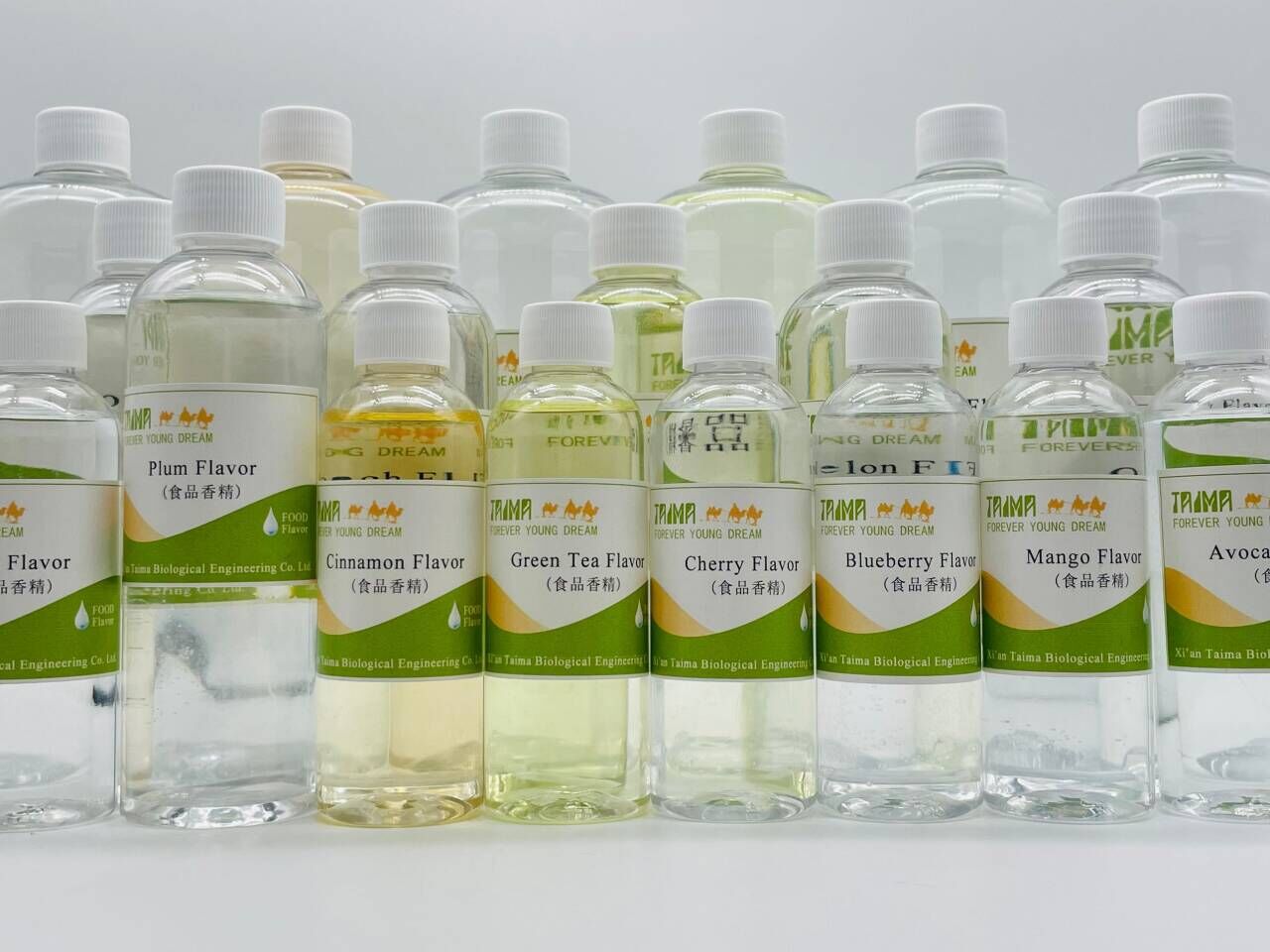
Food New Zealand Milk Flavour is used in Lactic acid bacteria beverages, fruit-flavored, yogurt, ice cream, milk foam, cheese, bread, cake, cookies, candies, tablet candies, soy milk, coconut milk, protein powder, e-cigarette oil, fishing bait, etc
Recommended Dosage:
Dairy beverages, yogurt: 0.02%–0.10%;
Ice cream, popsicles: 0.05%–0.15%;
Baking, biscuits, cakes: 0.10%–0.30%;
Candy, chocolate fillings: 0.10%–0.30%;
Plant-based beverages: 0.05%–0.10%;
Pet food, fish bait: 0.05%–0.15%;
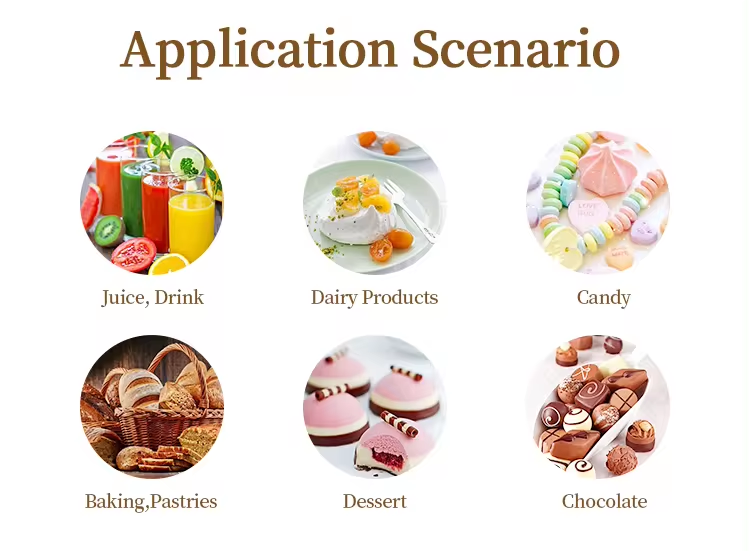
Food New Zealand Milk Flavour is used in Lactic acid bacteria beverages, fruit-flavored, yogurt, ice cream, milk foam, cheese, bread, cake, cookies, candies, tablet candies, soy milk, coconut milk, protein powder, e-cigarette oil, fishing bait, etc