E-cigarette mint-flavored e-liquids simulate a cooling sensation and prolong the aroma by blending natural ingredients such as menthol, peppermint oil, and spearmint oil, combined with synthetic cooling agents (such as WS-23) and fixatives and enhancers. They offer a variety of mint experiences, from refreshing to icy, and are a common flavor in e-liquids. However, their quality and health effects depend on the specific formula and the safety of the ingredients.
Composition and Function of Mint Flavoring:
Core Ingredients: Menthol, peppermint oil, spearmint oil.
Cooling Agents: In addition to menthol, synthetic cooling agents such as WS-23 are often added to provide a stronger, purer cooling sensation and compensate for the rapid evaporation of menthol.
Enhancers & Blenders: Improve the overall aroma, making it more rounded and full-bodied, and harmonize the mint flavor with the tobacco (or fruit) base aroma, providing a more consistent experience.
Fixatives: Reduce the overall volatility of the flavoring, extending the duration of the mint aroma.
Solvents & Base: Usually propylene glycol (PG) and vegetable glycerin (VG), mixed with the flavoring to form the main body of the e-liquid.
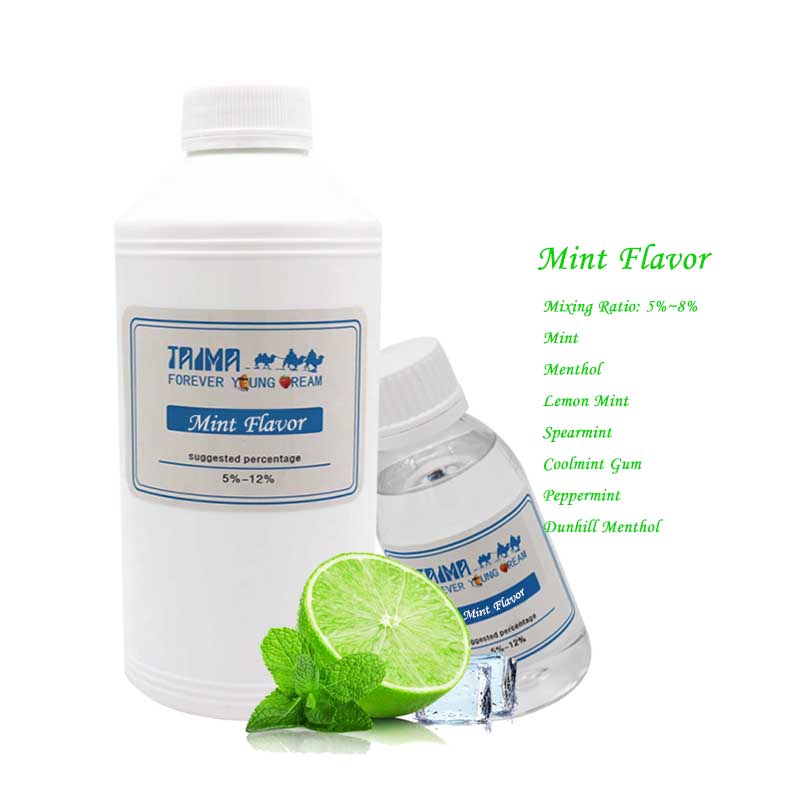
Different Types and Characteristics:
Natural Mint Type: Focuses on the refreshing aroma of natural peppermint oil; the taste may be relatively mild.
Strong Icy Type: Uses a large amount of cooling agents (such as WS-23), resulting in a strong, stimulating icy sensation.
Compound Type: Such as mint-tobacco compound e-liquid, which combines tobacco extract with mint flavoring to mimic the aroma and taste of traditional menthol cigarettes.
Industry Trends:
Flavor Diversification: Mint flavor is fundamental, and mixing it with other fruit/dessert flavors (such as mint slush, mint cola) is mainstream. Technological upgrade: Utilizing more advanced cooling agents to provide a wider variety of sensory experiences